
The Mansion’s Sentience
The Fall of the House of UsherRoderick’s belief that the mansion possesses a life of its own grows from atmospheric impressions into an explanation for his family’s fate.
increasing Bearing strength in each event
 decreasing
Bearing strength in each eventdecreasingAn Unnatural Atmosphere
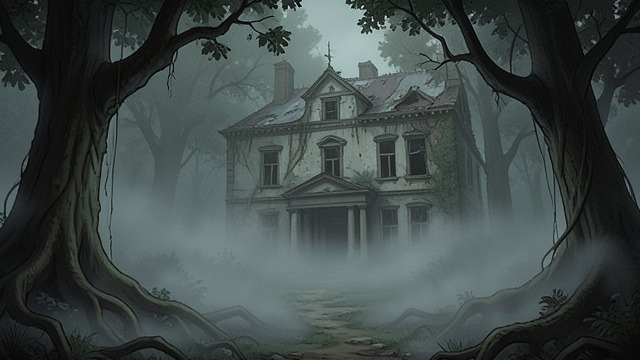
A Localized Vapour
An impression in the landscape
The narrator imagines a sluggish, leaden atmosphere rising from the trees, walls, and tarn. Though he dismisses the vision as a dreamlike fancy, the setting seems to exert a force of its own.
A first hint
The imagined vapour gives the estate a presence beyond its architecture. It anticipates Roderick’s later belief that the house and its surroundings act upon the family.
Roderick’s Theory
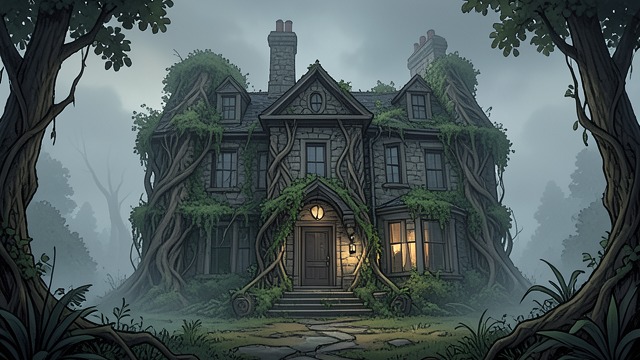
A Living Arrangement
Stones and surroundings
Roderick believes that the arrangement of the stones, fungi, trees, and tarn has fulfilled conditions for sentience. He sees the mansion as more than inert material.
An influence on the family
He claims that the house has moulded the family’s destiny and his own condition. The theory turns architectural unease into a causal account of inherited suffering.
The Tarn’s Reflection
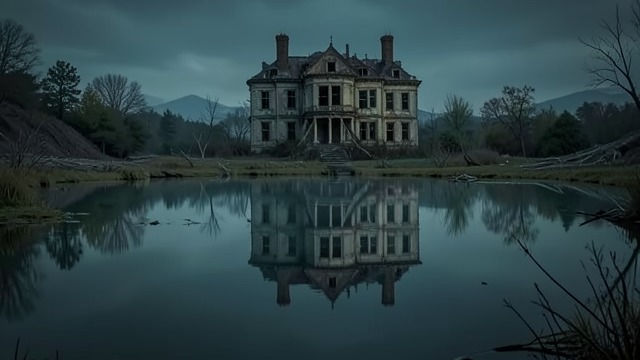
A Doubled Mansion
An inverted image
The narrator studies the building reflected in the still tarn. Rather than making the house seem less threatening, its mirrored image deepens his original dread.
A possible participation
The water appears to repeat the mansion’s form and its unsettling stillness. That visual doubling supports, without proving, the later idea that the surroundings participate in the house’s life.
The House as Cause
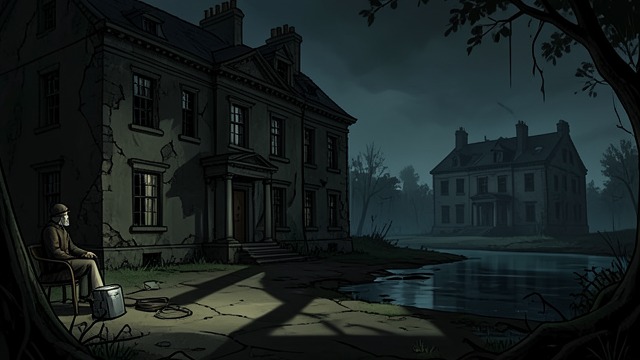
A Family Shaped by Place
The theory’s reach
Roderick connects his mental condition to the mansion’s form and substance. Its walls and the dim water are, in his view, active pressures on his existence.
Interpretation or delusion
The narrator declines to endorse the claim. Yet the house’s atmosphere and the family’s collapse allow the theory to remain disturbing rather than easily dismissed.
A Silent Confirmation
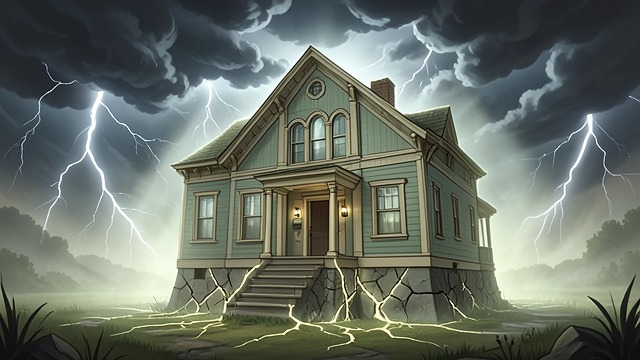
The Mansion’s Last Response
Uncanny light
A visible gaseous glow surrounds the house while the storm rages. The narrator offers electrical or atmospheric explanations, but the spectacle resembles the peculiar influence Roderick described.
Destruction of the structure
The fissure widens and the mansion sinks. The event cannot establish sentience, yet it leaves Roderick’s theory bound to the house’s decisive end.
Before the narrator reaches the entrance
During the narrator’s stay, before Madeline’s burial
At the narrator’s first approach
During Roderick’s explanation of his beliefs
During the final storm
